



What Are Bay Windows?
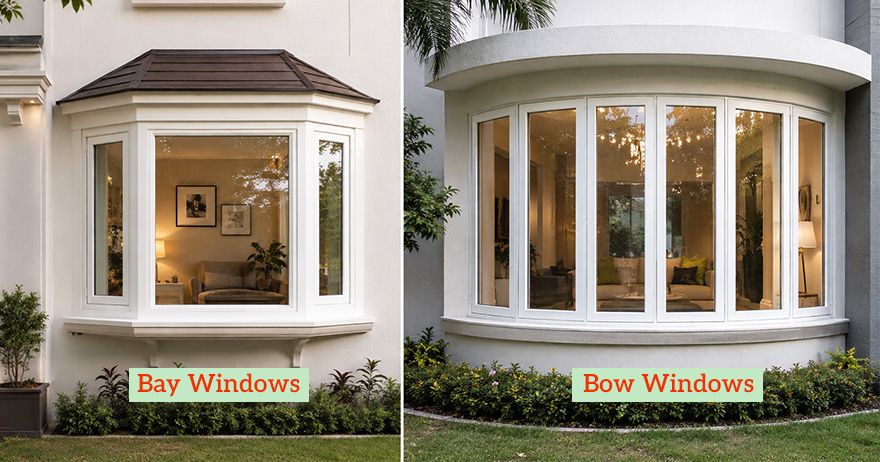
A bay window is a window assembly that projects outward from the main exterior wall of a building, forming an interior recessed bay. It typically features 3 panes - one large central fixed pane flanked by smaller angled fixed or operable windows, maximising natural light and expanding interior views.
Also Read: What Are Bay Windows?
What Are Bow Windows?
A bow window is a curved structure made of four or more window panels that stick out past the outer wall of a house. It forms a smooth, rounded arch instead of sharp corners, letting in extra sun and giving a wide view of the outside.
Bay Windows vs Bow Windows: Key Differences
| Feature | Bay Windows | Bow Windows |
|---|---|---|
| Window Configuration | Usually 3 windows | Usually 4 to 6 windows |
| Shape | Angular (typically 30° 45° or 90°) | Smooth curved appearance |
| Projection | Extends outward with sharp corners | Extends outward with a gentle curve |
| Natural Light | Increases daylight from three directions | Maximises daylight from multiple angles |
| Ventilation | Side windows can be operable | Multiple operable sections improve airflow |
| Space Created | Larger interior ledge or seating area | Wider panoramic space with softer aesthetics |
Bay Windows vs Bow Windows: Cost Comparison
| Cost Factor | uPVC Bay Window | uPVC Bow Window |
|---|---|---|
| Typical Price | ₹1000–₹1800 per sq. ft. | ₹1300–₹2200 per sq. ft. |
| Installation Cost | With IndiFrame it is included in the cost above | With IndiFrame it is included in the cost above |
| Expected Lifespan | 25–35 years | 25–35 years |
| Typical Hardware Replacement | Every 10–15 years depending on usage | Every 10–15 years; more locking points may increase replacement cost |
* Kindly contact IndiFrame for final quotation.
Best Rooms for Bay and Bow Windows
Bay windows feature three window panels that create a defined outward projection, making them ideal for rooms where extra floor space is valuable.
1. Living Room
A bay window can become the focal point of your living room by creating:
- A cosy reading nook
- Additional seating
- Space for indoor plants or décor
- More natural daylight throughout the day
2. Bedroom
Bay windows in your bedroom add charm and functionality by providing:
- A window seat for relaxation
- Extra storage beneath the seating area
- Better daylight without sacrificing privacy when paired with suitable glazing
3. Dining Room
In dining spaces, bay windows:
- Make the room feel larger.
- Create an attractive breakfast corner.
- Offer pleasant outdoor views while dining.
4. Home Office
Natural daylight can make a workspace feel more comfortable. A bay window in your home office provides:
- Better daylight penetration
- Space for a reading chair
- Improved ventilation when side windows are operable
Bow windows typically feature four to six window panels that create a gentle curve, making them well suited for larger spaces and homes with scenic surroundings.
1. Large Living Rooms
Bow windows in large living rooms can help create:
- Panoramic outdoor views
- Abundant natural light
- An elegant architectural feature
2. Primary Bedroom
A bow window in your primary bedroom can help create:
- A luxurious sitting area
- Wider views of gardens or landscapes
- A bright, airy atmosphere
3. Lounge or Family Room
The wider curve allows family spaces to feel:
- More open
- Better connected to the outdoors
- Visually spacious
Common Mistakes to Avoid When Choosing Bay or Bow Windows
1. Not Choosing a Brand with Proven Experience
Bay and bow windows require precise design, manufacturing, and installation, so choose a brand with proven experience in delivering these specialised window configurations.
2. Ignoring the Warranty Coverage
A bay or bow window is a long-term investment, so don't just compare prices. Check what's covered under the warranty for the uPVC profile, hardware, glass (where applicable), and installation to avoid unexpected costs later.
3. Choosing the Wrong Frame or Glass Specification
The performance of your bay or bow window depends largely on the material and quality of frame used, such as uPVC and glazing such as Double-glazed units for thermal insulation, Laminated glass for security and noise reduction and toughened glass for safety, so choose specifications that suit your climate, insulation, security, and acoustic needs.
4. Selecting the Wrong Window Configuration
Not every bay or bow window should have the same combination of fixed and operable panels, so choose a configuration that balances ventilation, views, and functionality for your space.
For example:
- A large fixed centre panel maximises the view.
- Side casement windows improve ventilation.
- Multiple operable panels provide greater airflow but may slightly reduce uninterrupted views.
5. Overlooking the Sun's Direction (and Vastu Preferences)
The direction your window faces affects natural light and indoor comfort, so consider both sun orientation and Vastu preferences during the planning stage to make the most of your window placement.
6. Not Assessing Structural Requirements
Since bay and bow windows project outward from the building, it's important to ensure your home's structure can safely support the additional load before installation.
7. Ignoring Architectural Harmony
Before choosing a bay or bow window, ask yourself what style you're trying to achieve. A sleek modern home, a classic colonial bungalow, a contemporary villa, or a traditional residence may each call for a different window configuration, profile colour, and glazing.
Bay Window vs Bow Window - Which Window Style Is Best for Indian Homes?
While there is no hard and fast rule, choose a bay window design if...
- You live in an apartment or an independent house with limited exterior wall space.
- You want to create a window seat, reading nook, or additional usable space.
- You're looking for a cost-effective solution without compromising on aesthetics.
- You prefer a bold, angular architectural feature.
- You want a window that's easier to install and generally more budget-friendly.
Best for: Apartments, bedrooms, living rooms, dining areas, and compact to medium-sized homes.
And choose a bow window design if...
- You have a villa, bungalow, or large home with a wide exterior wall.
- Your priority is panoramic views and maximum natural light.
- You want to create a premium, elegant architectural statement.
- You have scenic surroundings such as a garden, lake, or landscape to showcase.
- You're comfortable with a higher investment for a more luxurious appearance.
Best for: Villas, luxury homes, spacious living rooms, lounges, and homes with expansive outdoor views.
Final Thoughts
Whether it's bay windows or bow windows, both can transform the look, feel, and functionality of your home. While both extend outward to bring in more natural light, ventilation, and views, each serves a different purpose.
A bay window becomes ideal if you value practicality, additional usable space, and a cost-effective solution that suits most Indian homes. A bow window, on the other hand, is better suited for homeowners looking to make a bold design statement, maximise panoramic views, and create a more luxurious living experience.
Whichever style you choose, the outcome depends on the quality of the uPVC profiles, glazing, hardware, structural planning, and installation; all play a crucial role in ensuring long-term performance, energy efficiency, and durability.
Take the time to evaluate your home's architecture, available space, budget, and lifestyle needs before making a decision. With IndiFrame’s quality and disciplined planning and execution, both bay and bow windows can become a lasting investment that enhances your home's comfort, appearance, and value for years to come.