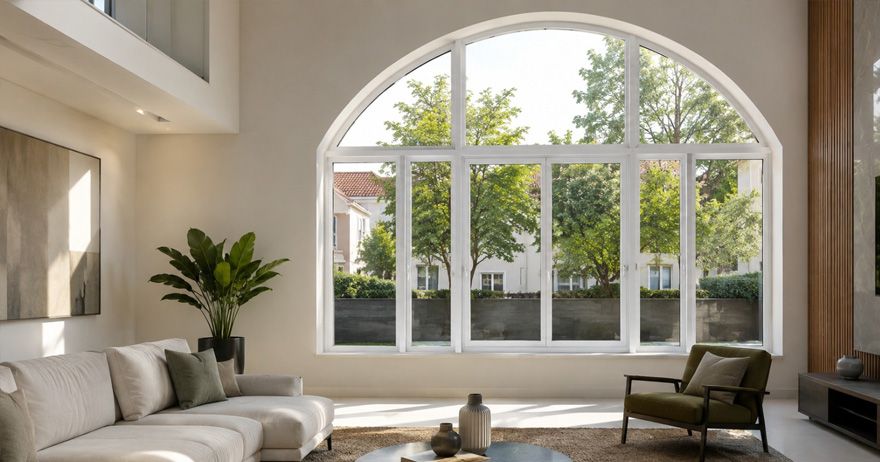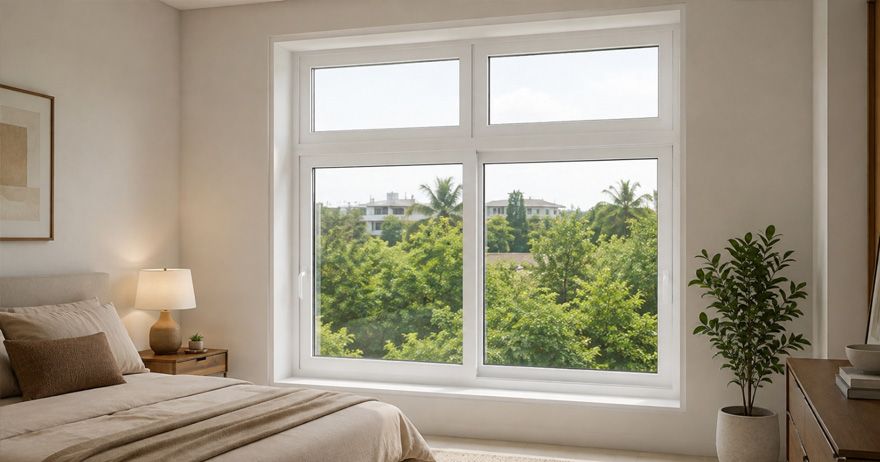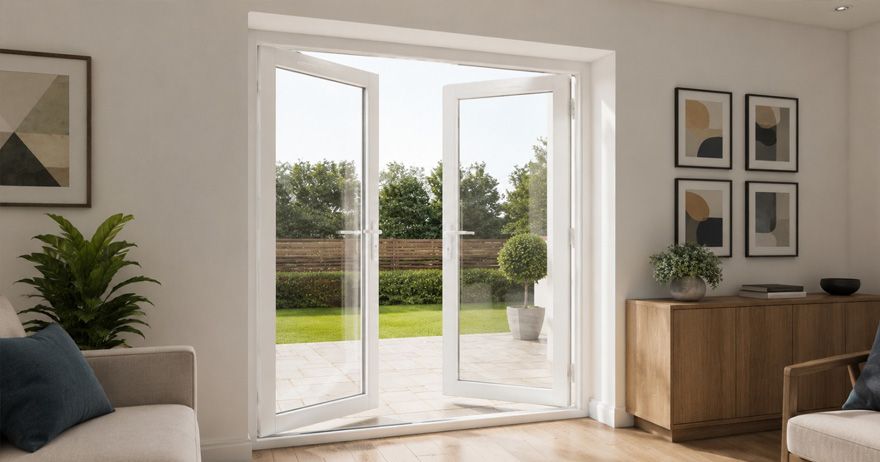




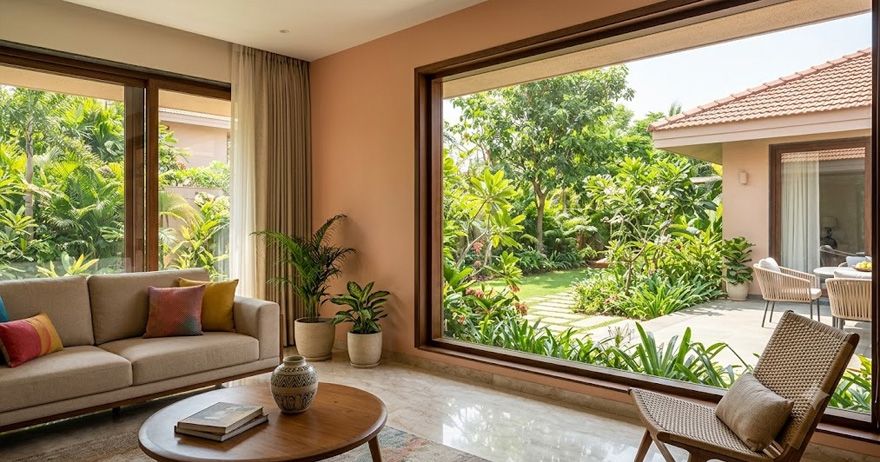
What Are Fixed Windows?
As the name suggests, fixed windows or picture windows are framed windows that do not open. Their purpose is limited to allow access to light and views only. They are called picture windows because this type involves the least hardware in addition to the frame and glass; therefore, it is as good as saying it's a framed live picture, as opposed to a framed painted still picture.
How Fixed Windows Differ from Operable Windows
Fixed Windows usually have limited components and hardware such as the frame, glass, glazing beads, and gaskets. Drainage slots and reinforcements may be required. Therefore, as mentioned earlier, they provide access to light and views only, with absolutely zero ventilation. However, any operable window, such as a casement window or sliding window, requires, in addition to the above, hinges, handles, a locking mechanism, a sash, and more, depending on the typology, and thus also allows ventilation.
Benefits of Fixed Windows
- Better insulation with fewer gaps for air to pass through.
- Improved sound reduction from the absence of opening joints.
- Minimal maintenance as there are no moving parts to adjust or replace.
- Fewer hardware components, making the overall system simpler to operate.
- Larger uninterrupted glass areas for better views and daylight.
- Greater resistance to air and water infiltration through the window.
- More freedom in large-format glazing and façade designs.
- Lower overall cost from reduced hardware, simpler construction, and lower maintenance.
Best Places to Install Fixed Windows
Fixed windows are best installed in high, hard-to-reach spots, scenic focal points, or areas needing extra daylight without ventilation. While they can ideally be installed in any habitable area or room, such as a living room, home office, or bedroom, fixed windows should ideally be paired with operable windows such as casement, sliding, or bay windows to avoid hampered ventilation.
For non-habitable rooms such as storage areas, it is recommended to stick only to a fixed window (if at all a window is needed), since it lets in natural light and stays tightly sealed, which keeps dust, rain, and bugs out. However, they do not open, meaning they offer zero airflow on their own. However, keep in mind the heat and lack of ventilation may require you to work around its temperature setting as well.
For non-habitable areas such as a kitchen, bathroom, staircase area, etc., it is optional to have a fixed, operable or combination of both.
How Fixed Windows Improve Energy Efficiency
The function lies in the name itself; therefore, there is no possibility of it being openable with a handle, hinges or rollers to open outward or slide through, respectively. Thus, the lack of air exchange between the interior and exterior helps maintain the interior’s room temperature. While generally fixed windows have smaller frames, which helps less heat pass through, uPVC profiles have lower heat transfer. Plus, when paired with performance glazing such as laminated or DGU and finishing such as reflective, they can help improve HVAC (heating, ventilation, and air conditioning) efficiency.
Combining Fixed Windows with Other Window Styles
You can combine fixed windows with French Doors/Windows to create French Windows with Sidelights, or with sliding doors to create a sliding door with sidelights or paired with casement windows or vertical slider windows when designing corner or bay windows. You can combine fixed windows with top-hung windows to create large floor-to-ceiling windows that balance expansive views with controlled ventilation.
These are only a few possibilities. Speak to IndiFrame and your architect to explore combinations that suit your space, particularly when balancing natural ventilation with the thermal and acoustic performance offered by fixed glazing.
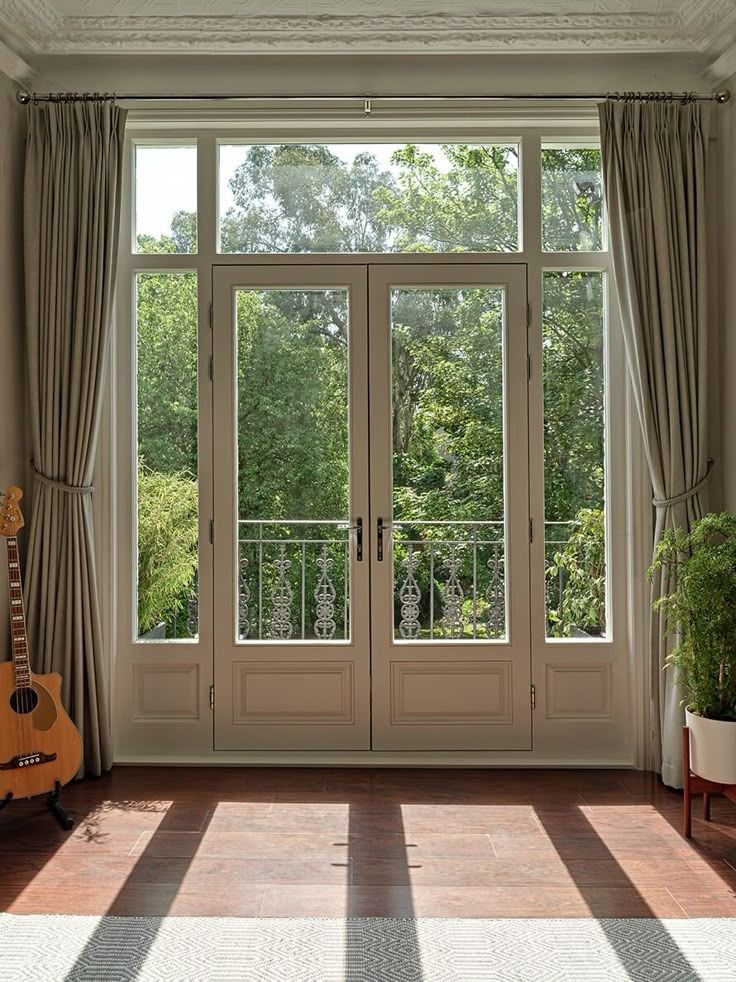
Alt: French Door with Sidelights and Transoms in Fixed Typology. Source: Pinterest
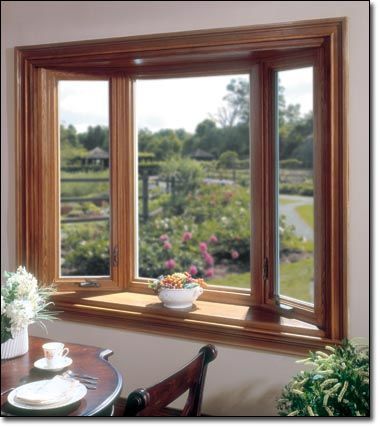
Alt: Bay Window with a Fixed Typology at the centre, flanked with Top Hung Typology on sides. Source: Pinterest
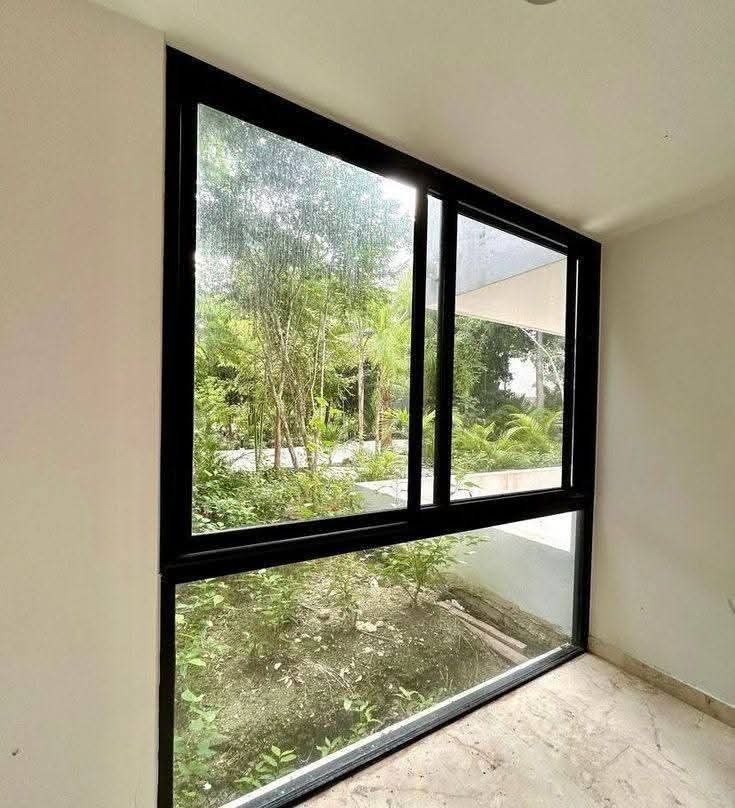
Alt: Sliding Window with a Fixed Typology below. Source: Pinterest
Fixed Windows for Modern Indian Homes
The real advantage of fixed windows in an Indian home lies in how easily they can be combined with different window typologies to balance experience, functionality and aesthetics. A fixed pane can bring in expansive daylight and uninterrupted views, while an adjoining operable window provides the ventilation needed for everyday comfort.
This flexibility also means fixed windows are not restricted to one architectural style. Whether the home follows a contemporary, minimalist, traditional, colonial, industrial or Indo-modern aesthetic, fixed glazing can be incorporated into the design through different proportions, frame finishes, glass choices and combinations with operable windows.
This becomes particularly valuable in Indian homes, where windows often need to perform against heat, dust, noise and varying ventilation requirements. Using fixed glazing selectively allows certain areas to remain tightly sealed for better thermal and acoustic comfort, while strategically placed operable windows provide airflow where it is needed.
From an aesthetic perspective, fixed windows allow larger glass areas, cleaner sightlines and more balanced façades without requiring every opening to be operable. Whether used as a corner window, floor-to-ceiling window, bay window or alongside sliding, casement or top-hung windows, the right combination can make a space feel more open while still responding to how the home is actually lived in.
Common Mistakes to Avoid When Choosing Fixed Windows
- Ignoring ventilation requirements: Using fixed windows as the only windows in a bedroom, living room, or other space that relies on natural airflow can leave the room poorly ventilated. Fixed glazing should be treated as a complementary, not a substitute for casement, sliding or other operable windows where ventilation is required.
- Choosing an inappropriate size: Installing an excessively large fixed pane without considering the room’s orientation, wall area and heat exposure can increase unwanted heat gain. On the other hand, making the window too small can limit the natural light and views that fixed windows are meant to provide.
- Using standard glass for large exposed panes: Because fixed windows are mostly glass, choosing single-pane or low-grade glass leads to heavy heat transfer, outside noise, and condensation.
- Ignoring cleaning and maintenance access: Placing large fixed windows at considerable heights or in areas that cannot be reached safely can make routine cleaning difficult. The fact that a window does not open does not mean its glass and frame will not require periodic maintenance.
- Incorrect placement on the wall: Positioning a fixed window without considering the sun’s direction, surrounding buildings, views and the room’s function can reduce its practical benefit. A window intended to bring in daylight or frame a view can end up creating excessive heat or providing very little useful light if poorly positioned.
- Compromising on installation quality: Choosing a good uPVC profile and performance glass will not deliver their intended benefits if the window is poorly aligned, sealed or fixed. Gaps around the frame can lead to air leakage, water ingress and reduced thermal and acoustic performance.
Final Thoughts
When planned thoughtfully, they can open up views, create larger and cleaner glazing areas, improve thermal and acoustic comfort, and complement almost any architectural style. The key is knowing where fixed glazing works best and where it needs to be combined with operable windows to maintain the right balance of daylight, ventilation, insulation and everyday usability.
No one combination works for every home. Whether you are planning a large picture window, a corner or bay window, floor-to-ceiling window glazing, or simply looking to combine fixed and operable windows, IndiFrame can help you find the right configuration for your space. Speak to our team and your architect to explore the right window typology, glass, hardware and combination for your home.