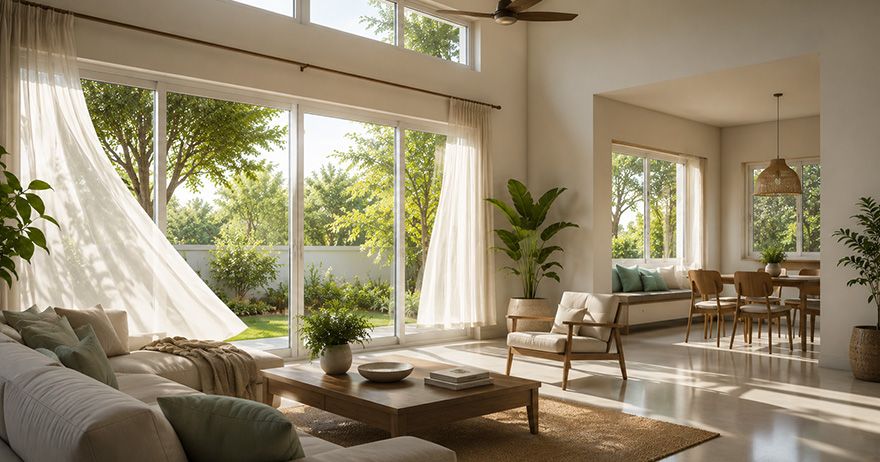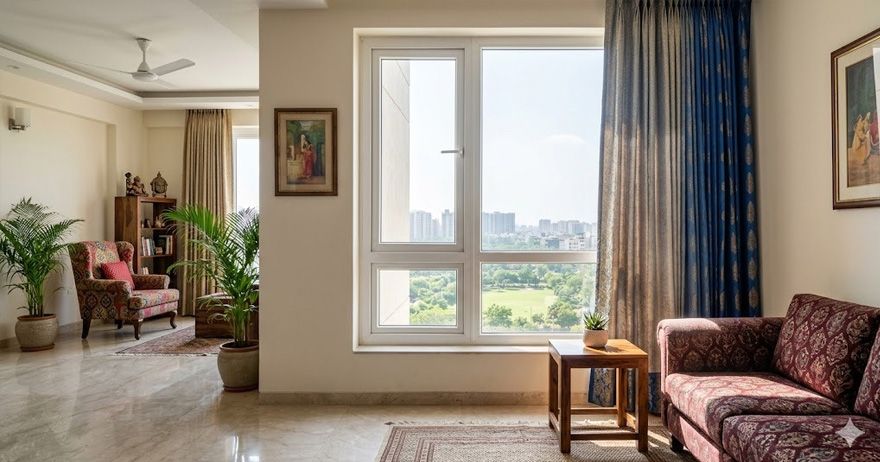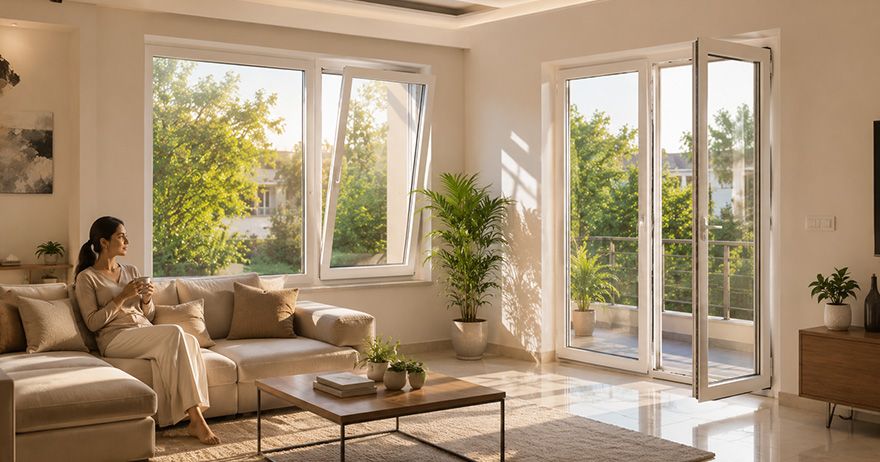
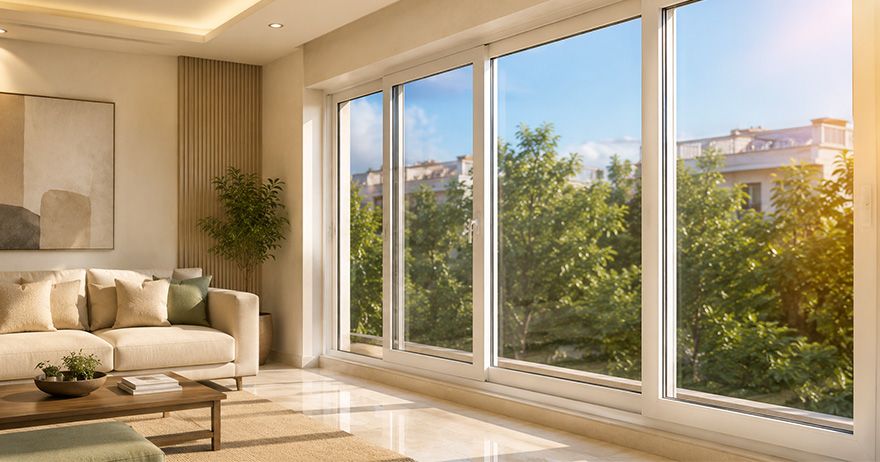
The best way to block harmful UV rays without losing natural light or outdoor views is to use Low-E glass, UV-blocking window films, or solar control glass. These solutions can block a significant portion of ultraviolet radiation while still allowing visible light to enter your home.
Unlike dark curtains or blinds, UV-protective glazing helps reduce fading of furniture, flooring, and fabrics without making rooms feel dark. Modern uPVC windows combined with advanced glass technologies provide both UV protection and improved energy efficiency for Indian homes.
In this blog, we will see how to block UV rays through windows.
Why UV Rays Are A Problem Inside The Home
If you think UV rays are only a concern when you step outside, you are wrong. UV radiation from the sun enters your home through every glass window and causes real, measurable damage to your furniture, flooring, and skin over time.
Since India sits in a tropical zone, UV exposure stays in the high-to-extreme range for most of the year. UV index levels can peak during midday, and harmful exposure begins as early as March. If you do the math, your home is literally absorbing UV radiation for right to tem months every year, every single day.
Before exploring how to block UV rays through windows, let’s see if regular windows block UV rays.
Do Windows Block UV Rays?
Regular windows do not block the UV rays completely.
Single-pane glass stops only about 25% of UV rays. A double-pane glass without any special coating blocks roughly 40 to 50% of the UV rays, but that still lets a large portion through. The rays that pass through most easily are UVC rays. UVB rays, which cause sunburn, are largely stopped by standard glass.
But the problem is that UVC rays are the ones responsible for fading your furniture and gradually ageing your skin. The protection that standard windows offer is incomplete.
How To Protect Furniture From Sunlight: Including Flooring & Interiors
The damage from UV rays is gradual and cumulative.
UV radiation breaks down molecular bonds in dyes, pigments, and finishes through a process called photodegradation. They are the main reason for interior fading in homes, accounting for 40 to 45%. The vulnerable prospects are fabric upholstery, leather sofas, wooden floors, and carpets.
In wood, UV radiation breaks down lignin, the natural compound that holds wood fibres together. Over time, this causes the wood to discolour, become brittle, and develop cracks. Curtains, paintings, and photographs also lose their original colours.
UV rays damage is happening in every room that receives direct sunlight.
How To Block UV Rays Through Windows
Don’t worry, we are not going to recommend staying inside a dark room to avoid UV rays. Here are some options for glass that blocks UV rays but allows light to come in.
Low-E Glass UV Protection
Low-E glass stands for low-emissivity. This glass has an ultra-thin metallic coating applied to its surface that reflects UV radiation and infrared heat away before it enters the room. A quality Low-E glass blocks around 75% of UV rays while allowing natural daylight through without distorting the view.
Solar Control Glass To Reduce Solar Heat Gain
Solar control glass uses a coating or tint embedded directly in the glass to reduce solar heat gain and UV transmission simultaneously. It is the ebay glass to block UV rays because it manages intense heat and high UV levels; it keeps the rooms cooler, reduces glare, and cuts UV exposure.
Window Film To Block UV Rays
Window films are thin sheets applied to the inner surface of existing glass. High-quality UV-blocking films can stop up to 99% of UVA and UVB rays. Make sure to get clear and lightly tinted films. They also cost less than replacing full window units and can be installed on any existing glass surface.
Double-Glazed Windows To Reduce UV Entry
Double-glazed windows use two panes of glass with a sealed air or gas-filled gap between them. Standard double-glazed units reduce UV entry compared to single-pane, but their primary purpose is thermal insulation. For better performance, pair it with a Low-E coating or a UV-blocking film.
Low-E Glass Vs Window Films: Which Is Better?
Low-E glass has an ultra-thin metallic coating applied to its surface that reflects UV rays. It is a permanent and maintenance-free solution. If you are building a new home or replacing old windows, Low-E glass is the best long-term choice.
Window films can be applied to your existing windows at a fraction of the cost of Low-E glass and can block a higher percentage of UV rays than basic Low-E glass alone.
For better performance, pair window films on top of the Low-E windows.
The right choice between Low-E glass and window films depends on your budget and whether you want to replace windows or want a quicker, more affordable option.
How UV Protection Improves Energy Efficiency
UV-protected windows reduce the solar heat that enters your home. In India, where air-conditioning runs for months continuously, this directly lowers your electricity bill. Low-E double-pane windows can cut heat transfer through glass by nearly 30% compared to single-pane windows.
Best Window Solutions For Indian Weather
The best windows for hot climates in India are double-glazed windows with a Low-E coating, or existing windows paired with a high-rejection UV film. You can also use solar control glass or UV films with a 99% rejection rate.
These are the best UV protection windows for homes.
uPVC frames paired with Low-E or solar control glass are a strong choice because the frame itself does not conduct heat, adding another layer of thermal protection.
This is how to block UV rays through windows.
Signs Your Home Needs Better UV Protection
If you see fading or discolouration on furniture, carpets, or curtains near windows, it is direct evidence of UV damage.
Wood flooring that has changed colour near window-facing walls, upholstery that looks washed out on one side, or rooms that feel uncomfortably hot near glass are all indications that your existing windows are not blocking UV radiation or solar heat properly.
How To Choose UV-Protective Windows
This is how to reduce sun damage indoors by choosing UV-protective windows.
- Check the UV rejection percentage and Solar Heat Gain Coefficient (SHGC) when comparing any window or glass product. A lower SHGC means less heat entering the room.
- For UV protection, look for a rejection rate of at least 99% in films, or a verified Low-E coating on glass.
- If you are buying new windows, choose double-glazed units with a built-in Low-E coating.
- If you are working with existing windows, a quality UV-blocking film is the ebay cost-effective option.
- Always prioritise south-facing and west-facing rooms while upgrading the windows.