



Planning the septic tank location as per Vastu is considered an important aspect of home design by those who follow Vastu Shastra. Proper placement is believed to help maintain a balanced flow of energy while also supporting practical requirements such as drainage, accessibility, and maintenance.
Along with Vastu recommendations, homeowners should also consider local building regulations, site conditions, and engineering requirements before finalizing the septic tank location. In this guide, we'll explain the commonly recommended directions for septic tanks according to Vastu, areas to avoid, and practical planning tips for modern Indian homes.
Why Septic Tank Placement Matters in Vastu
According to traditional Vastu Shastra, different zones of a property are associated with different elements and energies. Because a septic tank stores and processes wastewater, Vastu practitioners traditionally recommend placing it in specific zones while avoiding areas considered unsuitable.
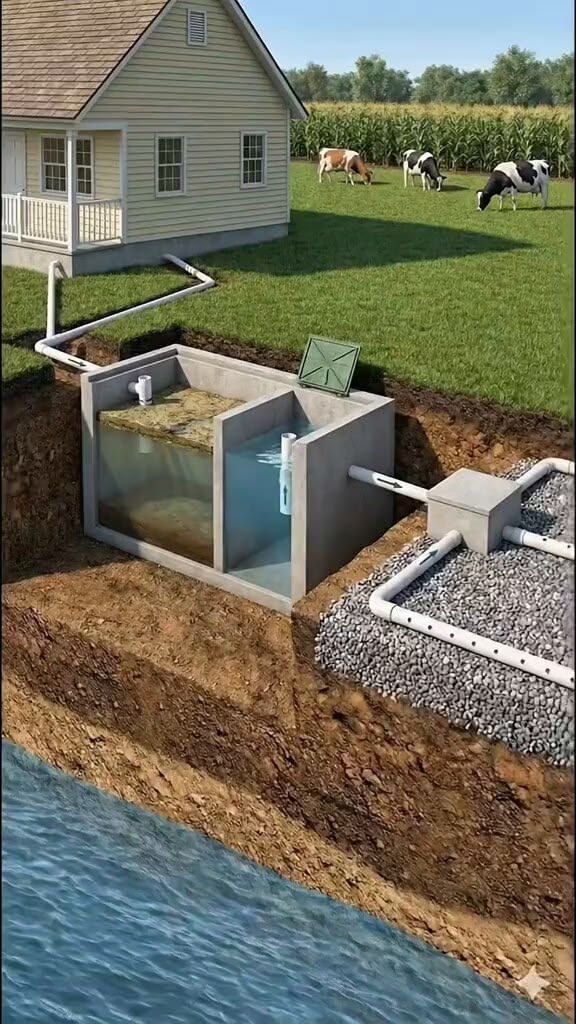
Following septic tank Vastu principles is therefore believed to help maintain balance within the property. At the same time, the septic tank must function safely and efficiently. Its location should allow proper wastewater flow, convenient access for inspection and maintenance, safe connection to the home's drainage system, adequate separation from sensitive areas, suitable ground conditions and practical access for servicing. A good design should therefore balance traditional preferences with the actual requirements of the site.
Best Direction for a Septic Tank as per Vastu
The septic tank direction is one of the main considerations for homeowners following Vastu Shastra. As Vastu recommendations can vary between practitioners, homeowners should avoid treating one direction as a universal rule for every property.
| Direction or Zone | Traditional Vastu View | Practical Consideration |
|---|---|---|
| Northwest | Commonly preferred | Check drainage and access |
| West-Northwest | Often considered suitable | Ensure sufficient space for maintenance |
| West | May be considered depending on layout | Verify site and drainage conditions |
| Northeast | Traditionally avoided | Keep the zone clear where possible |
| Centre of Plot | Generally avoided | Can interfere with planning and circulation |
| Southwest | Commonly avoided | Consider alternative locations |
The perfect Vastu for septic tank placement should therefore be evaluated together with the property's entrance, slope, drainage route, water sources, and available open space.
Directions and Locations to Avoid
Traditional Vastu practices generally recommend avoiding certain locations for septic tanks. These recommendations are based on the belief that wastewater-related structures should not occupy particular energy zones of a property. The northeast is commonly treated as a particularly important zone, and many Vastu practitioners advise keeping it free from septic tanks. Other commonly avoided locations are given below.
- Centre of the property: Traditionally considered unsuitable for underground wastewater structures.
- Northeast corner: Commonly avoided in traditional Vastu planning.
- Directly below the main building: Can create significant practical maintenance challenges.
- Near drinking-water sources: Should be avoided for hygiene and environmental reasons.
- Inaccessible areas: A tank should never be positioned where inspection or maintenance becomes difficult.
- Very close to structural foundations: The location should be evaluated carefully by a qualified professional.
Septic Tank Placement for Independent Homes and Villas
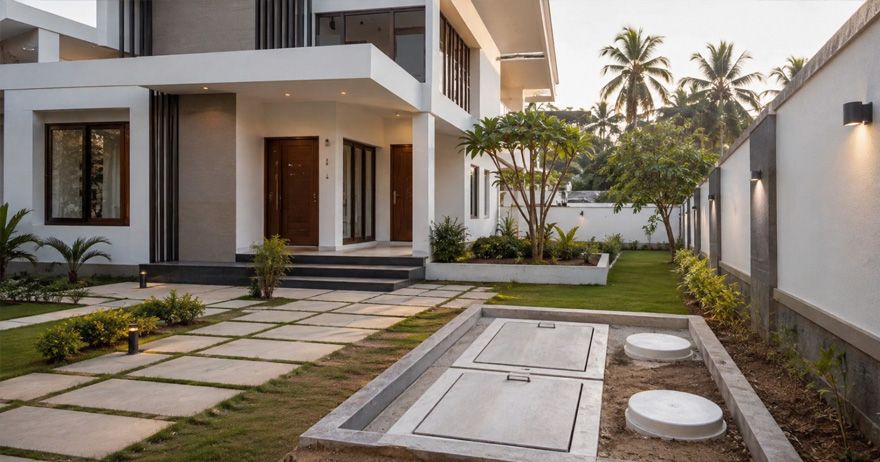
Independent houses and villas generally offer more flexibility because they have larger plots and more open areas around the building. The septic tank placement should be finalized alongside the floor plan, plumbing layout, site levels, and drainage system.
Independent Houses
For an independent house, consider placing the tank in an accessible side or rear portion of the property where it does not interfere with everyday activities. The location should provide sufficient space for maintenance without requiring major disturbance to the house.
Villas
Villas may have larger landscaped areas, driveways, and outdoor living spaces. The septic tank should be positioned so that future maintenance does not unnecessarily disturb these features.
A well-planned septic tank Vastu approach can be incorporated without compromising accessibility or the practical functioning of the wastewater system.
Practical Factors Beyond Vastu to Consider
A successful septic tank planning process combines traditional preferences with plumbing, structural, sanitation, and site considerations. Technical and environmental factors should take priority and the other factors are given below.
Drainage Flow
The tank should work efficiently with the home's wastewater drainage network. Avoid layouts that require unnecessarily complicated pipe routes.
Accessibility
A septic tank needs periodic inspection and maintenance. Ensure the access points remain reachable after landscaping, paving, or future construction.
Ground Conditions
Soil characteristics, groundwater conditions, and site levels can affect the suitability of a location. A site assessment may be necessary before construction.
Distance from Water Sources
The tank should be appropriately separated from wells, borewells, and other water sources to reduce the risk of contamination. Exact separation requirements can depend on local regulations and site conditions.
Building Foundations
The tank and its associated pipework should be planned so they do not compromise the structural integrity of the house.
Future Construction
Think beyond the current floor plan. If you may add another floor, parking structure, garden, or extension later, make sure the septic tank remains accessible.
Local Requirements
Local authorities may have requirements governing wastewater systems, sanitation, construction, and property setbacks. These should be checked before finalizing the design.
Common Mistakes in Septic Tank Planning
Homeowners following septic tank Vastu should also ensure that traditional preferences do not compromise safety, accessibility, or proper wastewater management. Avoid these below common mistakes.
- Choosing the Location Too Late: Finalizing the tank location after the house plan is complete can result in awkward pipe routes and difficult maintenance access. Plan it alongside the plumbing and site layout.
- Ignoring Drainage Slope: Wastewater needs an appropriate flow path from the house to the tank. Poorly planned slopes can cause blockages and drainage problems.
- Building Too Close to Water Sources: Septic tanks should be appropriately separated from wells, borewells, and other water sources to reduce contamination risks.
- Blocking Maintenance Access: Don't place the tank beneath permanent structures, landscaping, or paved areas that make inspection and servicing difficult.
- Ignoring Soil and Groundwater Conditions: Ground conditions can affect the suitability and performance of a septic system. Site conditions should be assessed before construction.
- Following Vastu Without Technical Assessment: Traditional recommendations can guide the preferred zone, but structural, plumbing, sanitation, and local regulatory requirements must also be considered.
- Forgetting Future Construction: A location that works today may become inaccessible after adding a room, driveway, garden, or another floor. Plan for future changes.
Vastu Tips for Homes with Limited Space
Good home construction Vastu planning is ultimately about finding a workable balance between traditional preferences and the physical limitations of the property. Some useful house Vastu tips for compact properties are given below.
Prioritize Suitable Zones
If the preferred northwest area is available and technically appropriate, it can be considered before less suitable alternatives.
Keep the Northeast Clear
If following traditional Vastu, avoid using the northeast corner for wastewater structures where another practical option exists.
Plan Pipes Efficiently
A compact plot requires careful plumbing planning. Avoid excessively long or unnecessarily complicated drainage routes.
Preserve Access
Even on a small plot, provide sufficient access for inspection, cleaning, and maintenance.
Consider Vertical Construction
If the house is planned for multiple floors, coordinate the septic tank and drainage system with the entire building rather than only the ground-floor layout.
Balancing Vastu Principles with Engineering Requirements
When planning Vastu guidelines for home, traditional recommendations should therefore be treated as an additional planning consideration rather than a replacement for professional engineering advice.
| Consideration | Traditional Vastu Approach | Practical Requirement |
|---|---|---|
| Direction | Prefer traditionally recommended zones | Must also suit drainage and site conditions |
| Northeast | Commonly kept free from septic tanks | Should be selected or avoided based on the complete site plan |
| Water Sources | Separation is generally preferred | Essential for sanitation and contamination control |
| Accessibility | Keep the area manageable | Required for inspection and maintenance |
| Drainage | Consider the flow of wastewater | Proper slope and pipe design are essential |
| Building Structure | Avoid unsuitable locations | Tank must not compromise foundations |
| Future Development | Consider the overall property layout | Ensure future construction won't block access |
Frequently Followed Septic Tank Vastu Guidelines
Different Vastu practitioners may provide slightly different recommendations, so there is no single universally accepted placement rule. The following table summarizes commonly followed traditional preferences while keeping practical considerations in view.
| Vastu Consideration | Common Traditional Recommendation | Practical Approach |
|---|---|---|
| Preferred Zone | Northwest is commonly recommended | Verify that drainage and access are suitable |
| Northeast | Generally avoided | Keep clear where practical |
| Centre of Plot | Generally avoided | Avoid placing major wastewater structures here |
| Southwest | Commonly avoided | Consider alternatives where technically possible |
| Access | Keep the area manageable | Ensure inspection and servicing access |
| Water Sources | Avoid unsuitable proximity | Follow applicable sanitation requirements |
| Building Foundation | Avoid direct conflicts | Coordinate with structural and plumbing plans |
When considering Vastu directions for house, remember that the actual suitability of a septic tank location depends on the complete site rather than direction alone.
Final Thoughts
Traditional Septic tank Vastu recommendations commonly favor certain zones and advise avoiding areas such as the northeast and centre of the property. However, these preferences should always be balanced with drainage requirements, soil conditions, groundwater considerations, structural safety, maintenance access, and local regulations. The right Septic tank design should be developed before construction begins.